
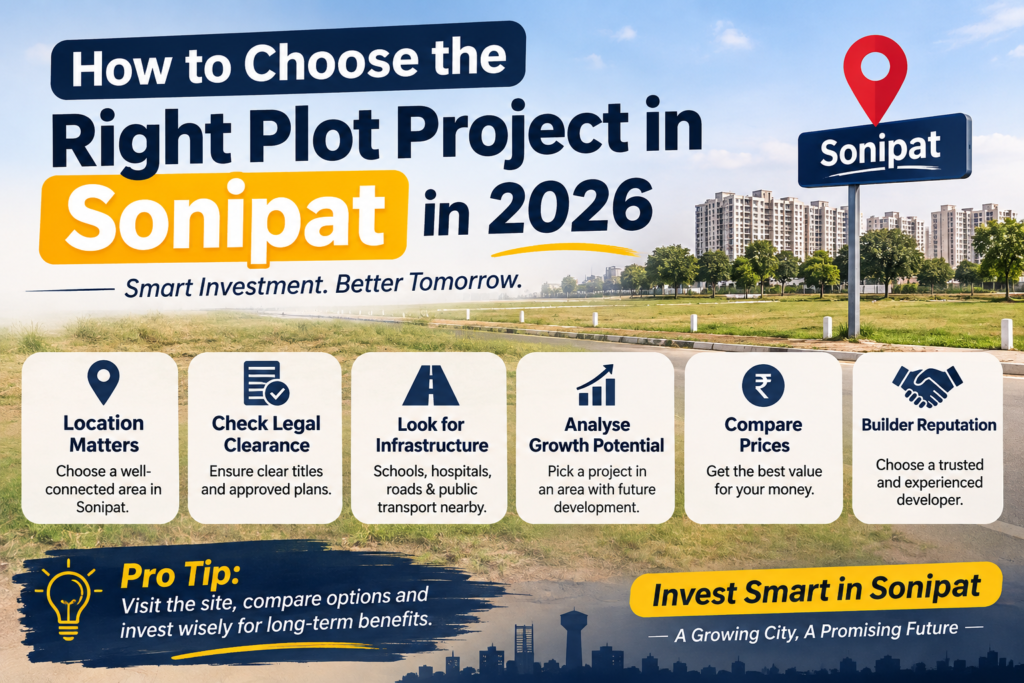
How to Choose the Right Plot Project in Sonipat in 2026 Sonipat is full of plot projects right now. Banners line the highways, social media is crowded with launch offers, and every seller claims to have the best location. For a buyer, the real problem is not finding options. It is separating the dependable ones from the noise. This guide gives you a simple way to choose, without needing any real estate background. Start With Your Own Goal Before comparing projects, get clear on why you are buying. A family planning to build in two years needs different things from an investor who plans to hold for a decade. If You Plan to Build Look for readiness: laid roads, water and sewage lines, electricity connections and a settled neighbourhood. Your construction should not have to wait for the area to catch up. If You Plan to Invest Focus on how the location may grow, how easily the plot could be resold and what the project plans for the long term. Also be honest about how long you can keep the money locked in, because land does not give you monthly income. Understand the Different Parts of Sonipat Areas differ in character, and the right one depends on how you live and what you can spend. If you want to see how a planned layout presents its details, take a look at plots in Sonipat and notice what information is clearly shared. Highway-Side Locations Plots close to major roads offer easy travel towards Delhi and usually come with higher rates. They suit buyers who value connectivity and plan to commute often. Interior and Industrial-Belt Locations These areas are generally more affordable, but their demand depends more on local jobs, factories and future development. They can suit buyers with a smaller budget and a longer holding period. Check the Project’s Credibility A good-looking brochure proves nothing. Credibility lives in documents and in what you can see on the ground. Approvals and Registration Ask for the licence details, the approved layout plan and the HRERA registration number, then verify them on the official websites yourself. The plot number and size in your agreement should match the approved plan. Work You Can See Roads, drainage, boundary walls and utility lines tell you more than any presentation. Compare the pace of work across two or three visits. Steady progress is a healthier sign than perfect photographs. The Developer’s Record Look into earlier projects, talk to residents if you can, and find out whether past promises were delivered on time. Compare Projects the Same Way Every Time Putting two quotes side by side only works when you ask each seller the same questions. Note the answers in one place so the comparison stays fair. Look Beyond the Rate per Square Yard Ask for the complete cost sheet. Some quotes leave out development charges, maintenance deposits or registry costs, which can change the real price noticeably. A lower headline rate is not always the cheaper deal. Match the Plot Size to Your Needs A smaller plot suits a compact home and a tighter budget. A larger one leaves space for parking, a garden or future floors. Choose a size you can actually build on comfortably. Visit, Ask and Verify Before Paying Go to the site on a weekday, speak with people nearby and try to get every answer in writing. Take a lawyer’s opinion on the title papers and the agreement. Pay only through traceable methods such as bank transfer, and keep every receipt safely. Plan Your Budget and Timing Set aside money for stamp duty, registry and any development charges on top of the plot price. Land values do not rise on a fixed schedule, so avoid stretching your finances. Reading about Sonipat property price trends in 2026 gives you useful context before you commit. Mistakes to Avoid Rushing because of a limited-time offer, trusting verbal promises and skipping a site visit are the errors that cost buyers the most. A genuine project will still be there after you have checked the papers, so never let urgency decide for you. Final Thoughts The right plot project is the one that fits your goal, your budget and your comfort with risk, and that can show its papers without hesitation. Shortlist a few options, compare them fairly, visit them in person and decide at your own pace. A calm, informed choice today is the best protection for your money tomorrow.

Buying in a Phased Society: What to Expect While Infrastructure Is Still Coming Up Walking into a new plotted society that is still under development can feel like a leap of faith. You see open land, fresh boundary lines and a few roads taking shape, while the brochure shows green parks and well-lit streets. The gap between the two is exactly what phased development is about. Understanding how this process works helps you judge a project calmly and avoid both blind trust and unnecessary worry. Why Societies Are Developed in Phases Building every facility across a large layout at the same time is expensive and hard to manage. So developers divide the work into stages and complete each one in sequence, often while plots are still being sold. If you are comparing plots for sale in Sonipat, it helps to ask which stage a project has reached rather than only looking at the final plan. Approvals and Funding Each stage usually depends on approvals, material availability and the funds raised from earlier bookings. Staged work lets the developer keep each part of the project properly funded and inspected. Market Demand Developers also watch buyer interest. Seeing demand grow in one section gives them the confidence to open and develop the next one. Benefits for Buyers Phased projects can offer earlier entry pricing and a wider choice of plot positions, since fewer plots have been taken. The trade-off is waiting a little longer for the full lifestyle the brochure promises. How Each Service Is Built in Stages Every project follows its own plan, but the build-up of basic services usually looks like this. Roads and Drainage Main internal roads are generally laid first because heavy vehicles and machines need access. Drainage channels are planned alongside them so rainwater does not collect on the layout. Narrower inner roads and final surfacing often come later. Water Supply and Sewage Lines Underground pipes are usually laid before final road surfaces, since digging up a finished road later would be wasteful. Water and sewage lines are often tested section by section before they are connected to plots. Electricity and Street Lighting Cables, transformers and poles or underground lines are installed once the roads are defined. Street lights are typically switched on in completed areas first, so some lanes may stay dark for a while. Parks and Green Areas Landscaping is commonly one of the last steps. Parks, play areas and plantation need stable roads and services first, so they take shape as the project matures. What to Expect Right After Booking In the first months, expect construction activity rather than a finished neighbourhood. There may be dust, trucks and temporary paths. Some plots may not yet have a connection point for water or electricity. This is normal, but you should know the expected dates for each service so you can plan your own construction accordingly. If your building plans depend on utilities, avoid committing contractors until those connections are confirmed. How to Check Progress Before You Book Ask for a Timeline in Writing Request a schedule that names each work and its expected completion. Check that the layout is approved and that the project is registered with HRERA, as these records often include declared timelines. Walk the Site Yourself Visit more than once and compare. Look at road width, pipe laying, boundary markers and the pace of work. Speaking with existing owners on site can give you honest insight that no brochure will. How to Monitor Progress After Booking Booking is only the start of your involvement. Ask for regular updates, visit every few months and compare what you see with the schedule. Keep agreements, receipts and messages in one place. If a deadline slips, raise it in writing so there is a clear record. Common Concerns Buyers Have What If Work Gets Delayed? Delays can come from approvals, weather or supply issues. Read the agreement for clauses on delivery timelines and ask how delays are handled. Knowing who is developing the project also matters, and our comparison of HSVP and private developer plots explains how accountability and timelines can differ. Will My Plot Value Rise as the Society Develops? As roads, lighting and parks are completed, the area becomes more comfortable and attractive to buyers, which can support demand. However, no developer or advisor can guarantee price growth, so treat it as a possibility rather than a promise. Final Thoughts A phased society asks for patience, but it also rewards careful buyers. Learn how each service is built, ask for timelines in writing, visit the site regularly and keep your records safe. With these habits, you can judge real progress instead of promises and decide with confidence.

Recurring Costs After You Buy a Plot: Property Tax, Maintenance and Utility Charges Buying a residential plot is an important step towards owning property. Many buyers focus on the purchase price, location and plot size when making their decision. However, the cost of owning land does not always end after the registration is complete. There are certain recurring expenses that buyers should understand before purchasing a plot. Property tax, maintenance charges, utility expenses and basic upkeep can all contribute to the overall cost of ownership. These expenses may vary depending on the location, local authority, development status and facilities available within a residential project. Whether you are planning to construct a house immediately or hold the property for future use, understanding these costs can help you manage your finances more effectively. 1. Property Tax: An Important Ongoing Expense Property tax is one of the first recurring expenses buyers should understand. Depending on the location and applicable local regulations, vacant plots and developed properties may have different tax treatment. Property tax is generally collected by the relevant municipal authority or local governing body to support public services and infrastructure. How Is Property Tax Applicable to Residential Plots? The applicable tax depends on several factors, including: Location of the property Plot size and classification Applicable local authority rules Whether the property is vacant or constructed Residential or commercial usage Buyers should not assume that an empty plot is automatically exempt from property tax. The applicable rules should be checked with the concerned municipal authority before purchasing. What Should Buyers Check? Before finalising a plot purchase, ask about its property tax status and any outstanding dues. If the property falls under a municipal jurisdiction, verify whether it has been assessed and whether previous payments are up to date. Keeping property tax receipts and assessment documents organised can also help avoid confusion later. 2. Plot Maintenance Charges A residential plot may not require the same level of maintenance as a constructed house, but it still needs attention. Leaving land unattended for long periods can create problems that may affect its condition and appearance. Maintenance requirements also depend on whether the plot is part of a gated residential society or an independently owned property. Common Maintenance Expenses Some possible maintenance expenses include: Cleaning and removal of unwanted vegetation Clearing waste and debris Maintaining the plot boundary Repairing damaged boundary walls, if constructed Preventing waterlogging Keeping the surrounding area clean For example, a plot that remains vacant for several years may require periodic cleaning to prevent excessive vegetation or waste accumulation. Are Gated Society Maintenance Charges Applicable? In a gated residential development, buyers may be required to pay maintenance or common-area charges according to the project’s applicable terms. These charges may support the upkeep of internal roads, parks, streetlights, common spaces and other shared facilities. Before buying, ask the developer or authorised management team about the maintenance structure, payment frequency and services included. Do not assume that every project follows the same charging system. 3. Utility Charges: Water, Electricity and Sewage Utility expenses are another aspect of plot ownership that buyers should consider, particularly when they plan to construct a house in the future. Even if a plot is vacant, buyers may eventually need to pay for utility connections, infrastructure or usage, depending on the project’s arrangements and applicable regulations. Water Supply and Sewage Charges Water supply and sewage infrastructure are important for residential development. Depending on the project and local authority, buyers may encounter expenses related to: Water connection and installation Sewage connection charges Pipeline-related infrastructure Periodic service or usage charges It is important to understand whether these facilities are already included in the plot price or whether separate payments are required. Electricity Connection Expenses Electricity is another essential requirement when constructing a home. Buyers should check the availability of electricity infrastructure and understand the applicable charges for obtaining an individual connection. Connection fees, meter installation and other charges may apply depending on the electricity provider and requirements of the property. 4. Additional Expenses Buyers Should Not Ignore Apart from property tax, maintenance and utilities, there may be other expenses associated with owning a residential plot. Boundary Wall and Security Some buyers prefer to construct a boundary wall to protect their property, especially when they do not plan to build a house immediately. This involves construction and occasional repair costs. Documentation and Legal Expenses Keeping property documents updated is equally important. Buyers may incur expenses for obtaining certified copies, legal consultation or other documentation-related services when required. Landscaping and Site Upkeep If you want to maintain the appearance of your plot, occasional cleaning, vegetation removal and basic landscaping may also add to your expenses. These costs are not necessarily annual or compulsory. They depend on the owner’s requirements and the condition of the property. 5. How to Plan Your Budget After Buying a Plot Planning for recurring expenses before purchasing land can help buyers avoid unexpected financial pressure. Instead of considering only the purchase price, prepare a separate ownership budget that accounts for possible future expenses. Here are some practical steps: Verify property tax requirements: Contact the relevant local authority to understand applicable taxes and outstanding dues. Ask about maintenance charges: Understand whether the project has recurring maintenance fees and what services they cover. Check utility arrangements: Confirm the availability and payment requirements for water, electricity and sewage connections. Keep an emergency amount: Set aside some money for unexpected cleaning, repairs or documentation expenses. Review project documents: Read the terms and conditions carefully to understand your responsibilities as a plot owner. Buyers exploring residential plots in Sonipat should also evaluate the location, infrastructure, development status and applicable ownership expenses before making a decision. 6. Why Understanding Ownership Costs Matters Before Buying in Sonipat Sonipat has become an area of interest for people exploring residential property and future home construction. However, selecting a plot should involve more than comparing its purchase price. Buyers should consider the surrounding infrastructure, road connectivity, availability of essential services and

Build Now or Hold the Land? When to Start Construction on Your Plot in Sonipat You have bought the plot. The registry is done, possession is in your hands and the excitement is real. Then a practical question appears: should you start building right away, or wait? There is no single right answer. The better choice depends on your budget, your family’s needs and how the area around your plot is developing. This guide walks through each factor so you can decide calmly instead of rushing or drifting without a plan. Why the Timing Matters Construction is not just a spending decision. It is a commitment of money, time and attention. Building too early can strain your finances. Waiting too long can mean rising material costs, delayed family plans or an unused plot that slowly becomes a worry. Getting the timing right helps you avoid all three. When Building Now Makes Sense You Need a Home Soon If you are paying rent and your family wants its own house, an early start usually makes sense. Every month of rent is money that could go toward your own home. Moving in sooner also helps you settle before life gets busier with school admissions, job changes or growing children. Your Budget Is Ready Construction needs more than a rough estimate. If you have funds for the full build, a buffer for surprises and some money left for finishing, you are in a strong position. Owners of 150 gaj plots in Sonipat, for example, can plan a compact family home with parking, and a project like that goes much more smoothly when the money is in place from the start. The Area Is Already Taking Shape Roads, water supply, electricity and neighbours make daily life easier. If your society already has basic infrastructure and homes coming up around you, building now means you will not be living in an empty stretch for long. When Holding the Land Is the Smarter Move Your Finances Are Still Stretched Starting a house without enough funds is one of the most common mistakes. A half-built structure costs money to protect and leaves a family waiting in limbo. If you would need to borrow heavily or stop midway, it is wiser to wait and build once you can finish. Your Plans Are Not Clear How many bedrooms will you need in five years? Do you want one floor now and more later? If you are still unsure, take the time to think. A house designed in a hurry is expensive to change. Infrastructure Is Still Coming In a developing area, utilities and connectivity improve over time. Waiting a little may mean easier access to services and better surroundings. Still, waiting should be a decision, not a drift. Factors to Weigh Before You Decide Budget Add up the full cost: design fees, approvals, labour, materials, finishing and utility connections. Then add a buffer of ten to fifteen percent for price changes. Our guide on hidden costs when buying a plot shows how easily extra expenses pile up, and construction brings its own surprises. Family Needs Think about who will live in the house. Elderly parents may need a ground-floor bedroom. Growing children need space and good schools nearby. A plan that fits your life over the next five to ten years will serve you far better than one built only for today. Area Development Visit regularly and watch how fast roads, parks and neighbouring homes are progressing. Steady progress is a good sign for building soon. Slow progress may mean waiting a little longer. Holding the Land Does Not Mean Ignoring It If you decide to wait, look after the plot. Mark the boundary clearly or build a boundary wall, visit now and then, keep your documents safe and pay any dues on time. Ask a neighbour or the society office to keep an eye on it. A vacant plot that is cared for stays easy to build on later. A Middle Path: Build in Phases You do not have to choose between everything and nothing. Some owners start with a ground floor and a strong foundation, then add upper floors when funds allow. Others finish the structure first and complete the interiors gradually. Phased building spreads the cost, but plan the foundation and utilities for the final house from day one. Final Thoughts There is no perfect moment, only the right moment for your situation. Build now if you need the home, have the funds and the area is ready. Hold if your finances, plans or surroundings still need time. Either way, decide with a clear budget and a written plan, and your plot will turn into the home you imagined.

Plot Booking Cancellation and Refund Rules: What Buyers Should Know Before Paying the Token Most buyers pay the token amount in a hurry. The site visit went well, the price felt right, and the dealer said the plot might not be available tomorrow. A cheque or transfer follows, and the paperwork gets read later, if at all. That is exactly when problems start. If your plans change, or the developer’s promises do not hold up, what happens to your money depends on what you signed and on the rules that protect buyers in Haryana. Before you commit to any of residential plots in Sonipat, it helps to understand how cancellations and refunds actually work. What the Token Amount Really Means Token vs. Booking Amount The token is a small payment that holds a plot for you while you complete checks and paperwork. The booking amount is usually larger and is paid once you decide to go ahead. Both are linked to a written receipt or booking form, and both can have conditions attached. It Is Not a Casual Payment A token is not just a goodwill gesture. Once you pay it, you have entered a commercial arrangement. The terms of that arrangement decide whether you can walk away and how much you get back. When Can a Buyer Cancel a Booking? Before the Agreement Is Signed This is the stage where cancellations are easiest, but even here the booking form matters. Some developers refund the token in full if you cancel within a stated number of days. Others deduct a processing or administrative charge. Ask for this in writing before you pay. After the Agreement for Sale Once a formal agreement is signed, cancelling becomes more serious. The agreement usually spells out what the developer can deduct if you withdraw. Under real estate regulation, a developer cannot take large advance payments without proper documentation, and the amount that can be collected before a registered agreement is limited by law. Read the clause on forfeiture carefully, because deductions that look unreasonably high may be questioned. When Can a Buyer Ask for a Refund? When the Developer Is at Fault Your position is much stronger if the developer, not you, is the reason for the exit. Common situations include: The project is not registered with HRERA when it should be The developer misses the promised possession date Facilities or layout shown at booking are changed without your consent The title or approvals turn out to be unclear In such cases, regulation generally allows a buyer to seek a refund along with interest, but the exact outcome depends on the facts and the agreement. If you suspect a problem, keep every receipt, message and brochure as proof. When You Change Your Mind If you are the one cancelling for personal reasons, the refund depends on the terms you accepted. Expect some deduction, and expect the process to take time. This is why reading the clause before paying matters more than arguing about it afterwards. Clauses to Check Before You Pay Forfeiture and Deduction Terms Look for the exact amount or percentage the developer can keep if you cancel. Vague wording such as “as deemed fit by the company” is a warning sign. Refund Timeline A good agreement states how many days the developer has to return your money after cancellation. If there is no timeline, delays become easy. Mode of Refund Check whether the refund goes back to the same bank account you paid from. Never accept the refund in cash or to a third party. Interest on Delayed Refunds Ask whether the developer pays interest if the refund is delayed. If the agreement is silent, the buyer is usually the one who waits. Protect Yourself Before Paying the Token Verify the Basics First Confirm the project’s HRERA registration, the title and the approvals. Spending an hour on checks costs far less than recovering a stuck refund. Our guide to common property frauds in Haryana explains the warning signs that buyers often miss. Pay Only Through Traceable Channels Use cheque, bank transfer or UPI to the developer’s official account, and always collect a printed, signed receipt. Avoid cash. Get Everything in Writing Verbal assurances do not count. If the dealer promises a full refund, ask for it to be written into the booking form. Do Not Rush A genuine plot will still be there after you have read the terms. Pressure to pay immediately is a reason to slow down. What to Do If a Refund Is Delayed Start by writing to the developer and asking for the refund in line with the agreement. Keep proof of every request. If this does not work, you can approach the Haryana Real Estate Regulatory Authority, which handles buyer complaints against registered projects. For serious disputes, speak to a property lawyer before taking further steps. Final Thoughts A token amount feels small, but the decision behind it is not. Understanding cancellation and refund rules before you pay protects your money and keeps your options open if plans change. Read the terms, ask questions, verify the project and keep records. A careful buyer rarely needs to claim a refund, and if one is needed, a clear paper trail makes it far easier. Frequently Asked Questions Is the token amount refundable? It depends on the booking form. Some developers refund it in full within a set period, while others deduct a processing charge. Get the terms in writing before paying. Can the developer forfeit my entire booking amount? Terms differ, but deductions that are unreasonably high can be questioned. Check the forfeiture clause before you sign and seek advice if the amount looks excessive. How long does a refund usually take? There is no single timeline. A good agreement states a fixed number of days, so ask for this upfront. What if the developer delays possession or changes the plan? Buyers can generally seek a refund with interest or raise a complaint with the regulatory authority. Keep

Can You Earn Rental Income from a House Built on a Plot in Sonipat? Most people buy a plot with one goal in mind: build a home and move in. But a growing number of buyers are asking a different question. Could the house on that plot earn money while they wait for the right time to move in, or even for years after? In a fast-developing city like Sonipat, the answer is often yes, provided you plan it properly. Why Rental Demand Is Growing in Sonipat Rental demand follows jobs, connectivity, and affordability, and Sonipat has all three. Industrial activity in the Kharkhoda belt, education institutions, and easy access to Delhi via NH-44 have created a steady pool of tenants. Working professionals, small families, and students all look for decent housing without paying Delhi prices. Who Typically Rents in Sonipat Professionals working in nearby industrial and corporate hubs Families who commute to Delhi but want more space and lower rent Faculty and students connected to local universities Small business owners who need a base close to the NCR market Each group wants something slightly different, so knowing your likely tenant helps you design the house. How Owning a Plot Helps You Earn Rent With an apartment, you buy a fixed layout. With a plot, you decide what gets built. That freedom is the biggest advantage for a rental investor. If you are exploring residential plots in Sonipat, you can choose a size and design that suits the rental market instead of adapting to someone else’s floor plan. Single Floor, Multiple Floors, or Separate Units A single-storey house can be rented as one unit to a family. If your plot allows additional floors, you can build each floor as an independent portion with its own entrance. Several smaller rentals often bring in more combined income than one large rental, though they also mean more tenants to manage. Choosing the Right Plot Size A mid-sized plot gives you room for a comfortable layout, parking, and possibly a second floor. Very small plots can limit your design choices, while very large ones raise your construction cost before any rent comes in. Match the plot to your budget and the type of tenant you want to attract. What Affects How Much Rent You Can Charge Rent is not fixed. It depends on a handful of practical factors you can plan for. Location and Connectivity Homes close to highways, markets, schools, and hospitals rent faster. Good road access matters to tenants who commute daily. Quality of the Neighbourhood Tenants pay more for safety and cleanliness. A gated society with wide roads, street lighting, security, and proper drainage usually attracts longer-staying tenants than an unplanned area. Construction Quality and Finish A well-built house with good ventilation, reliable plumbing, proper electrical work, and neat finishing commands better rent. Cheap shortcuts during construction tend to show up later as repair bills and vacant months. Parking and Basic Amenities Parking space, water supply, power backup, and a safe entrance are small details that make a big difference to tenants in Haryana. Costs You Should Count Before Expecting Profit Rental income only makes sense when you look at the full picture. Before you build, factor in: Construction cost and the time it takes to complete Approvals and utility connections Regular maintenance and repainting between tenants Property tax and any applicable local charges Periods when the house sits empty between tenants Many first-time landlords focus only on monthly rent and forget these. A realistic estimate keeps your expectations healthy. Legal and Tax Basics for Landlords Use a Written Rent Agreement Always sign a proper rent agreement that covers the rent amount, security deposit, notice period, and rules about subletting. A written agreement protects both you and the tenant if a disagreement comes up. Verify the tenant’s identity and complete the police verification that is commonly followed in Haryana. Rental Income Is Taxable Income you earn from renting out a house is generally taxable, and certain deductions may be available. Tax rules change from time to time, so speak to a qualified chartered accountant before you start renting. Keep records of rent received and expenses paid. Keep Your Ownership Papers Clean Strong, clear ownership documents make renting simpler and protect your property in any dispute. Keeping your registry and land records in order from day one saves trouble later. Rental Income vs. Long-Term Appreciation A plot gives you two ways to benefit. Rent provides regular cash flow, and the land itself can gain value over the years as the area develops. That combination is what many investors find appealing. If you are still comparing options, this breakdown of whether a plot is a better investment than an apartment in Sonipat looks at rental income, maintenance, and appreciation side by side. Keep in mind that appreciation is not guaranteed and rental yields vary by location and property type. Treat any figure you hear as an estimate and verify it locally before you decide. Practical Tips Before You Start Study local rents first. Talk to property dealers and check listings in the area to see what similar homes actually rent for. Build for your tenant. Design around the needs of families, professionals, or students rather than personal taste alone. Plan for low maintenance. Durable materials save money in the long run. Start with a clear budget. Include a cushion for delays and unexpected costs. Choose a planned location. Infrastructure like roads, drainage, and security directly affects how easily you find and keep tenants. Final Thoughts Yes, you can earn rental income from a house built on a plot in Sonipat, and the combination of design freedom, growing tenant demand, and long-term land value makes it a sensible option for patient investors. The key is to plan before you build: pick the right location, size the plot for your goals, budget honestly, and keep your paperwork in order. Done well, your plot can become a home for your family today and a steady
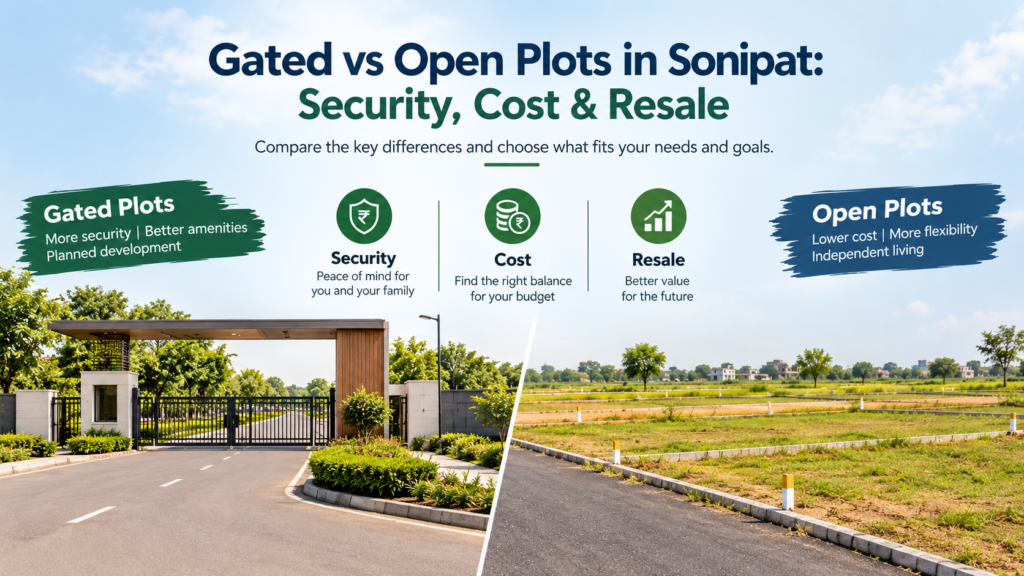
Gated Society Plots vs. Open Plots in Sonipat: Security, Maintenance, and Resale Value Two plots can sit a few kilometres apart in Sonipat and still offer very different ownership experiences. One lies inside a planned community with a main gate and shared facilities. The other is a standalone piece of land on an open road or in an unplanned pocket. For first-time buyers, this choice often matters more than the plot size itself. This guide compares both options on the three things buyers care about most: security, maintenance, and resale value. What Is the Difference Between Gated and Open Plots? Gated Society Plots A gated society plot is part of a layout developed as a single project. It usually comes with internal roads, drainage, water and electricity provisions, street lighting, parks, and controlled entry. Buyers browsing plots for sale in Sonipat will often come across layouts of this kind. Because the whole project is planned together, plot sizes, road widths, and open areas follow a consistent design. Open Plots An open plot is a standalone piece of land without a shared boundary or common management. It may be in an older residential pocket, along a village road, or in an area where land was sold in pieces. You get more independence, but you also take on more responsibility for access, utilities, and surroundings. Security: Who Looks After Your Land? How Gated Societies Handle It Controlled entry points, boundary walls, and security staff reduce the chances of strangers wandering through the layout. For buyers who plan to build later or live outside Sonipat, this is a real comfort. An empty plot inside a guarded layout is less exposed to casual dumping and unauthorised use than one lying on an open road. What Open Plot Owners Must Do Themselves On an open plot, protection is entirely your job. Fencing, boundary marking, regular visits, and a reliable local contact all become necessary. Boundary disputes with neighbours are also more common where there are no fixed layout markers. None of this is a dealbreaker, but it takes time and attention, especially if you live far from the site. Maintenance: What Will You Actually Spend? Costs in a Gated Society Gated communities usually charge a maintenance fee for upkeep of roads, lighting, parks, and security. The amount varies by project, so ask for the exact figure and what it covers before you book. In return, you get shared services that would be difficult to arrange on your own. Costs and Effort with Open Plots Open plots rarely come with a monthly fee, which looks attractive on paper. The catch is that nobody maintains the road in front of your land, and drainage or water connections may depend on public infrastructure that is still catching up. You may end up spending your own money, or time chasing local offices, to get basics in place. Compare the total long-term cost, not just the monthly bill. Resale Value: Which Is Easier to Sell? Why Gated Plots Often Attract More Buyers Many buyers today prefer a planned setting with clear plot numbers, defined roads, and shared amenities. When a resale buyer can see a well-kept layout and access the documents quickly, the decision is easier. This does not guarantee a higher price, since location and demand drive value, but it often means more interested buyers and smoother negotiations. Where Open Plots Can Still Make Sense Open plots can offer attractive pricing and flexibility, and in a fast-developing area, they may appreciate well. The risk is uncertainty. Unclear access, a narrow road, or doubtful surroundings can make resale slower. A clean title, direct road access, and a growing neighbourhood go a long way in protecting value. Legal Clarity and Approvals Whichever type you choose, paperwork comes first. Check that the layout or land is approved, the title is clean, and the seller can show proper documents. If you are weighing planned layouts against government-allotted land, this comparison of HSVP vs. private developer plots in Sonipat explains how ownership and approval routes differ. Do not rely on verbal promises, and keep copies of every receipt and agreement. Who Should Choose Which? A Gated Society May Suit You If You live outside Sonipat or plan to build after a few years You want shared infrastructure and security without arranging it yourself You prefer a planned layout with predictable surroundings Ease of resale matters to you An Open Plot May Suit You If You live nearby and can visit the site regularly You are comfortable handling fencing, utilities, and local follow-ups You have found a well-located plot with a verified title You want more flexibility and fewer community rules Questions to Ask Before You Decide Before paying any booking amount, ask for the approved layout plan, the status of roads and utilities, the exact maintenance charges, and who will manage the colony over the long term. A good seller will answer clearly and put key details in writing. If you are still comparing options, visiting more than one site in person, at different times of day, will tell you far more than photographs can. Final Thoughts There is no single right answer. A gated society offers convenience, security, and an easier resale story, while an open plot offers independence and sometimes a lower entry price in exchange for more effort. Match the choice to your budget, your timeline, and how involved you want to be. Verify every document, visit the site in person, and speak to a property lawyer before signing. A careful decision today will protect both your money and your peace of mind for years to come.
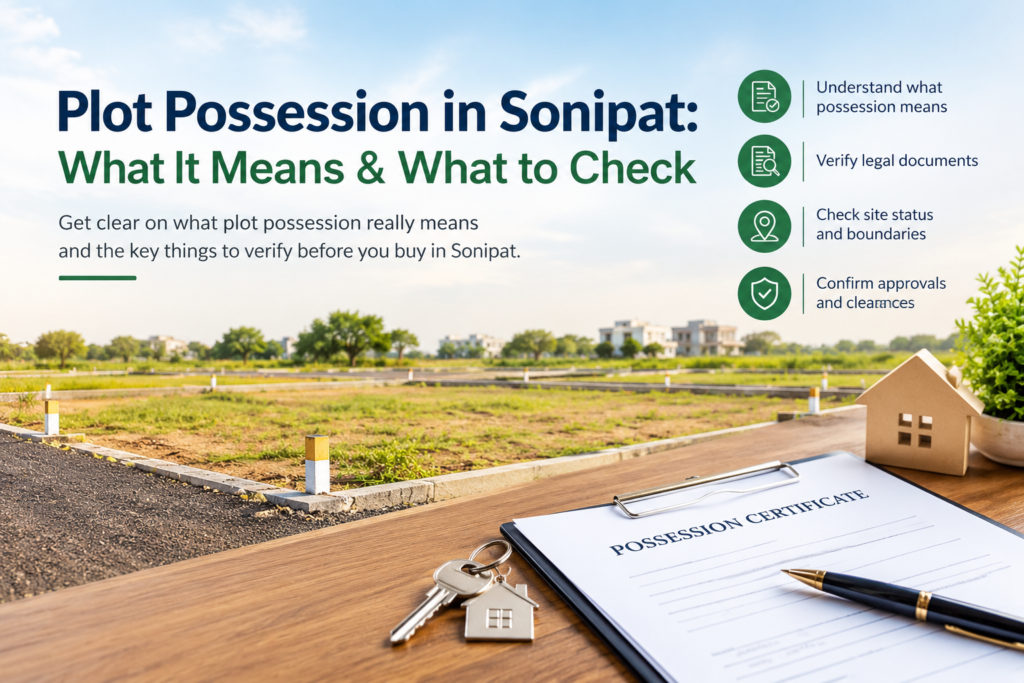
Possession of a Plot in Sonipat: What It Means, What to Check, and What Happens Next The sale deed is signed, the registry is done, and on paper the land is yours. Then a question comes up that many first-time buyers don’t expect: when do you actually get hold of the plot? That handover is called possession. It is a separate step from registration, and getting it right can save you from disputes, delays, and unpleasant surprises before construction begins. What Does Possession of a Plot Mean? Possession means you have received real, physical control of the land. You can enter it, mark it, fence it, and eventually build on it. It is the point where the plot stops being a document and becomes a piece of ground you can stand on. Legal Ownership vs. Physical Possession Registration of the sale deed gives you legal ownership. Possession gives you practical control. The two usually happen close together, but not always. In a developing layout, the registry may be completed first, while the actual handover waits until roads, drainage, and boundary work reach a stage where the plot can be safely delivered. Always ask your developer in writing when possession will be given, so you are not relying on verbal assurances. What to Check Before Accepting Possession Do not treat possession as a formality. This is your last good chance to catch problems while the seller still has an obligation to fix them. Plot Number, Size, and Boundaries Visit the site with your layout plan and registered documents in hand. Confirm that the plot number matches your papers and that the dimensions on the ground match the dimensions on the map. A tape measure and a second pair of eyes help. Check that boundary markers, often small pegs or pillars, are in place on all sides. If your plot is a corner plot, give extra attention to both road-facing edges. Development Status of the Surrounding Area A plot is only as useful as the infrastructure around it. Look at the internal roads, water supply lines, sewage and drainage arrangements, street lighting, and electricity provisions. If you are shopping for plots for sale in Sonipat inside a gated society, ask for a clear development timeline and compare it with what you can see on site. Promised work that is still incomplete should be noted in writing, not left to memory. Dues, Payments, and Clearances Before taking possession, make sure every installment you owe has been paid and acknowledged. Ask whether any development, maintenance, or other charges are pending. Taking possession with unclear dues can lead to arguments later about who owes what. Documents You Should Receive at Possession Keep a complete file from day one. At the time of handover, you should typically have: A possession letter or handover certificate signed by the developer A copy of the registered sale deed All payment receipts, including the final one A no-dues certificate, where applicable The approved layout plan with your plot clearly marked If something is missing, ask for it before you sign anything. Documents are much harder to collect months later, when staff or priorities may have changed. What Happens After You Take Possession Possession is not the finish line. It opens the next stage of your plot journey. Mutation in Revenue Records After registration, the ownership change should also be reflected in the revenue records, a process commonly known as mutation. Without it, the government records may still show the previous owner. Once it is updated, you can verify the entry yourself by following this guide to check land records online in Haryana. Keeping a printout of the updated record with your other papers is a smart habit. Utility Connections and Building Approvals If you plan to build, start by getting your building plan approved by the competent authority before any construction work begins. You will also need to arrange temporary and permanent electricity and water connections. Ask the developer what facilities are already available and what you will need to apply for on your own. Protecting Your Plot An empty plot can attract encroachment or casual dumping. Once possession is yours, put up a simple boundary wall or fence, display a board with your name and plot number, and visit regularly. If you live far away, ask a trusted relative or caretaker to check on it. Common Mistakes to Avoid at the Possession Stage A few errors come up again and again. Buyers skip the physical measurement because they trust the paperwork. They accept verbal promises about pending development work. They delay mutation because “everything is already registered.” And they forget to take dated photographs of the plot on the day of handover. Photographs and written notes may seem unimportant now, but they can be valuable if a dispute ever arises. Final Thoughts Possession is the quiet but important step that connects buying a plot with actually using it. Take your time, inspect the site carefully, collect every document, and follow up on mutation without delay. Procedures can differ from one project and authority to another, so speaking to a qualified property lawyer before you finalize the handover is a sensible precaution. A careful possession process today makes the construction stage far smoother tomorrow.

Tax Benefits on a Plot Purchase and Home Construction Loan Many people assume that anything labelled “home” comes with a tax break. Plots don’t work that way. The tax department treats a piece of land very differently from a house, and that difference decides when you save and how much. If you’re looking at residential plots in Sonipat with a house of your own in mind, it helps to know which deductions apply on day one and which only begin once construction starts. Plan around that and you won’t be disappointed when you file your return. Tax Benefits When You Buy a Plot Interest on a Plot Loan The home loan interest deduction under Section 24(b) is meant for loans taken to buy, build, repair or reconstruct a house. A loan for vacant land doesn’t qualify, because there is no house property yet. So the interest you pay on a plot loan before construction generally gives you no deduction on its own. Principal Repayment and Stamp Duty Section 80C allows a deduction on home loan principal, and on stamp duty and registration charges paid on a house purchase. Like the interest deduction, it is linked to a residential house. Buying bare land doesn’t earn you these benefits. Where Plot Buyers Still Benefit Your spending on a plot isn’t wasted from a tax point of view. Stamp duty, registration charges and brokerage all count as part of your cost of acquisition, which lowers your taxable gain when you eventually sell. Land held for more than 24 months is treated as long-term, and its gains are taxed at a flat rate (currently 12.5% without indexation). If you reinvest the proceeds in a residential house, Section 54F can reduce or remove that tax, subject to its conditions. Tax Benefits Once You Start Building Interest Deduction on a Construction Loan Section 24(b) applies once you take a loan to build on the plot. For a self-occupied home, you can deduct up to ₹2 lakh of interest a year. Timing matters here: construction must be completed within five years from the end of the financial year in which you took the loan. Miss that window and the cap falls to ₹30,000. Pre-Construction Interest Interest you pay before the house is complete isn’t lost. You can claim it in five equal instalments, starting from the year construction finishes. For a self-occupied property, your combined yearly claim, including regular interest, remains within the ₹2 lakh limit. Principal Repayment Under Section 80C After the house is built, the principal part of your EMI qualifies for up to ₹1.5 lakh under Section 80C. This limit is shared with your other 80C investments, such as PPF and EPF. Repayments made during construction don’t count, so the claim begins only after completion. If you sell the property within five years of taking possession, earlier deductions can be reversed. Joint Loans When you and a co-owner, such as your spouse, both repay the loan, each of you can claim the interest and principal deductions in proportion to your share. This works well when both partners are in a higher tax bracket. Old Regime or New Regime? Nearly all of the deductions above are available only under the old tax regime. Under the new regime, which is the default, you can’t claim interest on a self-occupied home or Section 80C. So calculate your tax both ways. If your total deductions (home loan interest, 80C, HRA and others) are large, the old regime may save you more. If they’re modest, the lower slab rates of the new regime may come out ahead. Also note that the Income-tax Act, 2025 replaced the 1961 Act from April 1, 2026, and section numbers have changed. The benefits described here continue in substance, but ask your CA which section numbers apply when you file. Practical Tips for Plot Owners Keep your lender’s annual interest certificate and loan sanction letter safe. Track your construction timeline so the house is finished within the five-year window. Keep proof of completion, such as the completion certificate or possession papers. If you want to split the claims, make sure co-owners’ names match on both the loan and the property records. If you’re still sorting out the financing, our guide on how to get a plot loan in Haryana explains eligibility and the process step by step. Final Thoughts A plot on its own offers limited tax relief, but the picture improves once you start building. Understanding that difference in advance helps you time your loan, your construction and your choice of tax regime. A short conversation with a chartered accountant before you build can save you far more than it costs.

Common Property Frauds in Haryana and How to Avoid Them Buying land is rarely a small decision. For most families it means years of savings, sometimes a loan on top, all going into a single transaction. Land values in Haryana have climbed steadily, from Gurugram to Sonipat, and that growth has also attracted people who sell what they don’t own. The good news is that property fraud isn’t random. It follows a handful of patterns, and once you know them, they’re much easier to spot. If you’re comparing plots for sale in Sonipat or anywhere else in the state, understanding these patterns before you pay a token amount can save you from a dispute that drags on for years. The Most Common Property Frauds in Haryana Double Sales A seller agrees to sell the same plot to two or more buyers, collects money from each, and registers it with whoever pays last or pays most. The first buyer, holding only an agreement or a receipt, is left chasing a refund. This usually happens when deals are done on paper agreements instead of a registered sale deed. Forged and Fake Documents Fake allotment letters, doctored jamabandi extracts, photocopied registries with altered plot numbers and made-up NOCs all circulate in the market. They can look convincing, especially to first-time buyers who have never seen the originals. Sometimes the document is genuine but belongs to a different plot, and the fraudster is counting on you not to check the khasra number. Fake or Misused Power of Attorney This is probably the trickiest one. A Power of Attorney lets someone act on the owner’s behalf, but it is often abused. Signatures get forged, cancelled POAs stay in circulation, and some are used even after the owner has died, when the authority legally ends. Many sellers also pitch a “POA sale” as equal to ownership. It isn’t. The Supreme Court has made it clear that GPA-based transactions don’t transfer title. Selling Without Ownership Some agents collect booking amounts for land they have no rights over. It could be shamlat land, government land, land under litigation, or simply someone else’s holding. All they offer you is a confident pitch and a site visit. Why These Frauds Work Most victims aren’t careless. They’re rushed. A “last two plots left” message, a festive discount, or a recommendation from a family friend is enough to make people skip checks they would normally insist on. Fraudsters rely on urgency and trust, so slowing down is your strongest defence. Warning Signs You Shouldn’t Ignore A few red flags show up again and again: A price well below the market rate, with pressure to decide quickly A seller who avoids showing original documents or meeting at the sub-registrar’s office Large cash payment demands The seller’s name doesn’t match the owner’s name on the land record Only a POA or an agreement to sell is offered, with no clear chain of ownership A layout with no licence or approval details If two or more of these appear together, step back and verify everything before moving forward. How to Protect Yourself Before You Pay Verify the Land Record Check the jamabandi on the Haryana land records portal and match the owner’s name, khewat and khasra numbers with the papers you’ve been shown. Confirm that the mutation entries are up to date, and ask for a non-encumbrance certificate to make sure the plot isn’t mortgaged or under dispute. Then visit the site. Boundaries and possession should match what the paperwork says. Insist on a Registered Sale Deed Only a registered sale deed, executed before the sub-registrar, transfers ownership. Agreements and receipts don’t. If the seller is acting through a POA, check that it is registered and still valid, and confirm directly with the owner that they are alive and aware of the sale. Our guide on Power of Attorney vs. Sale Deed explains why the two documents are never interchangeable. Pay Only Through Banking Channels Use bank transfers or cheques made out to the verified owner. Avoid cash, and never pay into an agent’s personal account. Keep every receipt, because a clear paper trail is your best evidence if something goes wrong later. Take a Lawyer’s Opinion A property lawyer can trace the title back through earlier transfers, something most buyers can’t do on their own. The fee is small compared with the cost of fighting over a disputed plot. Prefer Approved, Documented Projects Licensed layouts with clean titles reduce risk significantly. Check the licence details with the Haryana town planning department, and see whether the project is registered with HRERA. Final Thoughts Property fraud thrives on hurry and misplaced trust. Slow the process down, verify the records yourself, insist on registration, pay traceably and let a lawyer read the title. A few extra days of checking is a very small price for the peace of mind that comes with a clean, undisputed plot.